How to Repair Your Lawn After Moles
Repairing a mole-damaged lawn before the animal is gone is wasted work. Once activity has stopped, the repair itself is straightforward.
First: make sure the mole is actually gone
This is the step people skip, and it is the one that matters most. If you flatten ridges and reseed while a mole is still working the yard, the new growth gets ridged up again and you have paid twice for the same repair.
Wait until activity has stopped — no new ridges for a stretch, and the flatten-and-check test coming back flat. On a trapped property, that is the point at which we consider the job done, and it is the right point to start repairing.
Flatten, do not dig up
Start by walking the ridges flat with your feet or a lawn roller. Mole tunnels are shallow, and most of the damage is raised turf rather than dead turf — pressing it back into contact with the soil is often enough for the grass to recover on its own.
Do not dig the tunnels out. Excavating a run system does more damage than the mole did, and it is unnecessary: once the soil is back in contact with the roots, the lawn can re-establish itself.
Topdress and overseed the thin spots
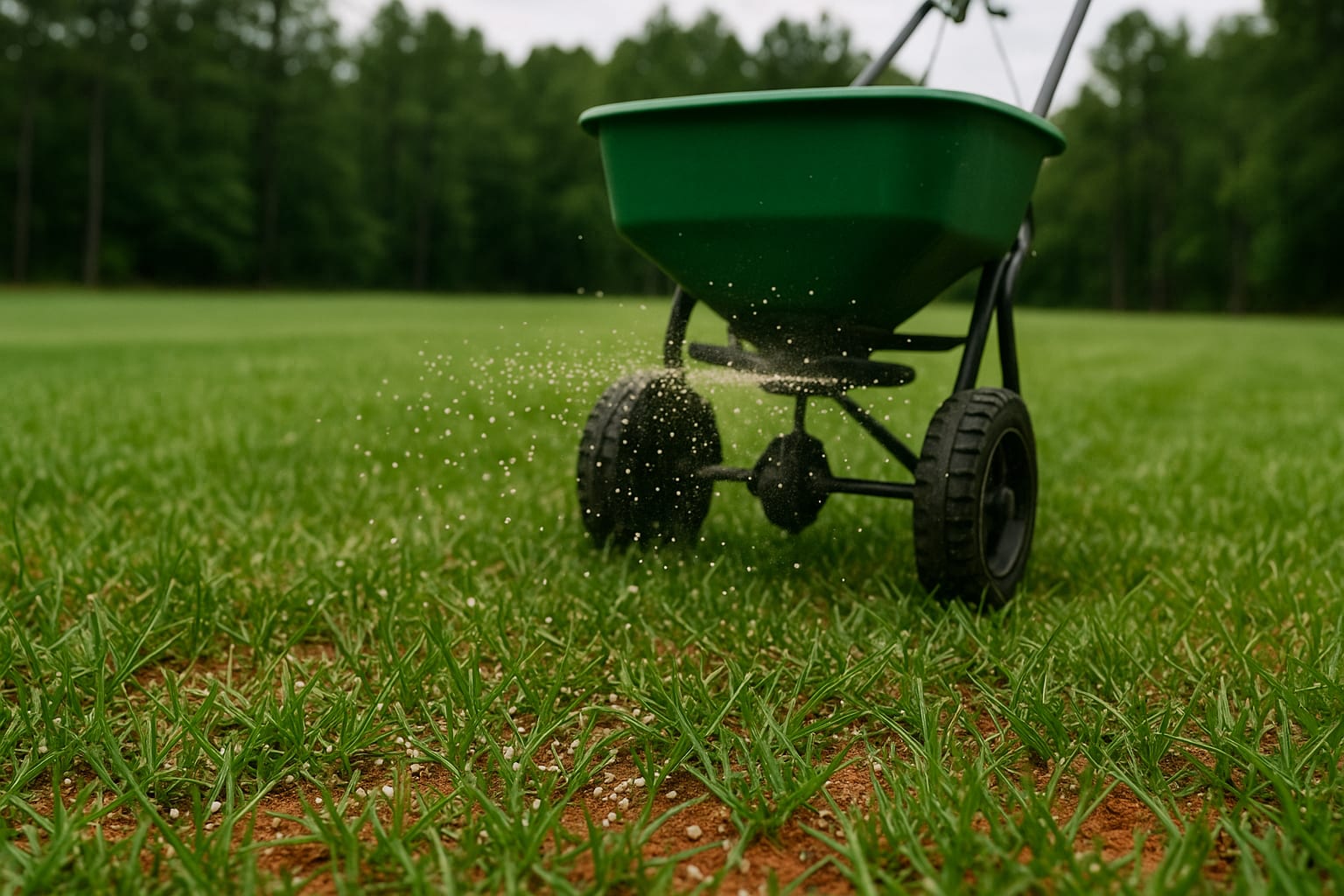
Where the turf is genuinely thin or bare, spread a light topdressing of soil or compost over the area and overseed with a grass suited to your lawn. Keep the seed damp until it establishes — which, on a Georgia lawn, usually means watering more often than you would for established turf.
Do not expect an instant lawn. Recovery takes weeks, not days, and it depends on the season, the grass type, and how much of the root system survived. A lawn that looks rough in the first week after repair is normal, not a sign the repair failed.
What not to do
Do not put down a grub treatment, a repellent, or a poison bait as part of the repair. None of those fix turf, and as the rest of this site explains, none of them reliably remove a mole either. If a new mole moves in later, it will find a repaired lawn just as attractive as a damaged one — the answer then is trapping again, not a product.
And do not roll the lawn heavily or repeatedly. One pass to settle the ridges is enough; heavy, repeated rolling compacts the soil, which is worse for the grass long-term than the ridges were.
More guides: All guides →